How Bathroom Ventilation Problems Lead to Ceiling Mold
Why bathroom ceiling mold keeps coming back
You clean the ceiling. You scrub the grout. Within weeks the dark spots return, usually in the same corners above the shower or near the exhaust fan. The pattern is frustrating, but it is also a clue. Persistent ceiling mold almost always points to a ventilation problem, not just a cleaning gap. Understanding how air moves - or fails to move - through your bathroom is the first step toward a lasting fix.
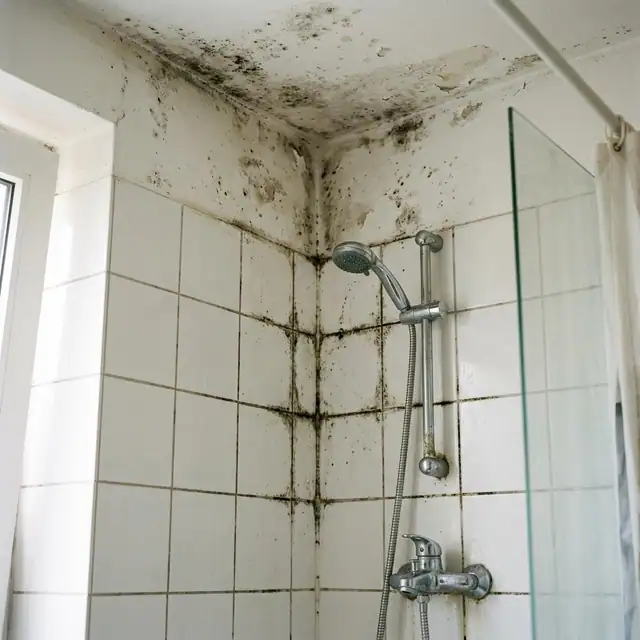
Mold needs three things to grow: moisture, warmth and a food source. Bathroom ceilings supply all three. Steam from a hot shower condenses on the cooler ceiling surface, leaving a thin film of water. The ceiling material - paint, drywall joint compound, sometimes old wallpaper - contains organic compounds that mold can digest. If the air stays damp long enough, spores land and colonize. The question is why the air stays damp. Most of the time the answer is poor ventilation.
How bathroom ventilation is supposed to work
A properly ventilated bathroom exchanges the damp indoor air with drier outdoor air before condensation can form on surfaces. There are two main ways this happens: natural ventilation through an open window and mechanical ventilation through an exhaust fan. In older homes or small apartments, a window may be the only option. In most modern construction, a ceiling-mounted fan ducts the moist air outside through a vent in the roof or an exterior wall.
The fan is rated by its airflow, measured in cubic feet per minute (cfm). Building codes typically require a fan that can move at least 50 cfm for a standard bathroom and up to 100 cfm for larger rooms. But a fan that meets code on paper can still fail in practice if the duct is blocked, the fan motor is weak, or the air has no path to enter the room. A bathroom that is sealed too tight - weatherstripped door, no undercut - can starve the fan of makeup air, reducing its effectiveness drastically.
What happens when ventilation fails
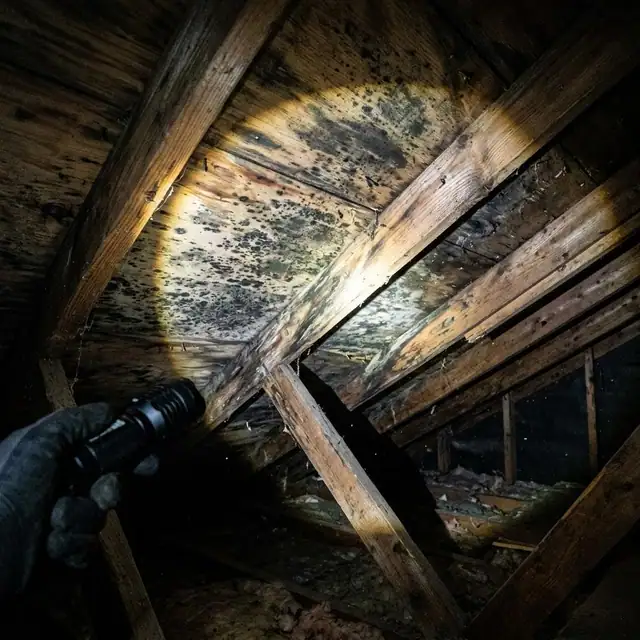
When the exhaust fan cannot pull enough moisture out, the relative humidity inside the bathroom stays high long after the shower ends. The ceiling stays wet longer, and the mold spores that always float in household air find a stable home. Over weeks, the colonies spread from a few dark specks into a patch that stains the paint and eventually damages the drywall paper facing.
But the problem is not always a broken fan. Sometimes the fan runs but vents into the attic instead of the outdoors. That pushes moist air into the attic space, where it condenses on the roof sheathing and can lead to structural mold and rot. Sometimes the duct run is too long or has too many bends, which drops the effective airflow below what the fan can deliver. And sometimes the fan simply runs for too short a time. A typical bathroom timer runs for fifteen minutes, but on a humid day the ceiling may need forty-five minutes of continuous ventilation to dry completely.
The telltale signs of a ventilation-driven mold problem
If you suspect your bathroom ceiling mold is caused by poor ventilation, look for these clues during a bathroom mold inspection:
- Mold concentrated directly over the shower or tub, where steam rises and lingers.
- A pattern of spots that follows the shape of the ceiling joists or the path of the exhaust fan duct, suggesting uneven airflow.
- Visible condensation on the ceiling twenty minutes or more after a shower ends.
- A fan that sounds weak, wobbles, or moves noticeably less air when you hold a tissue near the grille.
- A fan that runs but vents into an attic, soffit, or other enclosed space rather than the outdoors.
Each of these signs points to a ventilation failure that no amount of bleach cleaning will solve. The mold will keep returning because the moisture is not being removed at its source.
What to do about it
Fixing a ventilation problem usually starts with a careful inspection, not with a new fan purchase. Check whether the existing fan actually exhausts outdoors. In many homes, the fan grille hides a duct that dead-ends in the attic or simply blows air into the ceiling cavity. If the duct is disconnected or missing, reconnecting it to a roof vent or installing a new sidewall vent is the real fix.
If the duct is intact, the next check is the fan itself. Older fans lose efficiency as bearings wear and blades accumulate dust. Replacing a decades-old fan with a modern, higher-cfm unit can make a noticeable difference. Consider a fan with a humidistat that runs automatically until the humidity drops to a set level, rather than relying on a manual timer. That kind of fan addresses the core problem directly: it keeps running until the air is dry, regardless of how long that takes.
Also consider the air path into the room. An exhaust fan needs makeup air to push moisture out. If the bathroom door has no undercut and the window is closed, the fan may struggle to move air at its rated speed. A one-inch gap under the door or a transfer grille in the wall provides the necessary airflow without sacrificing privacy.
For bathrooms that have no existing fan and no window, the options are more limited but still real. A through-wall fan installed high on an exterior wall can work well. In some cases, a PIV (positive input ventilation) unit that introduces filtered dry air into the bathroom can help, though this is less common. The key is to create a continuous air exchange that keeps the ceiling surface temperature above the dew point.
When the damage is already done
If ceiling mold has been growing for months or years, the drywall may be compromised even after the surface is cleaned. Mold penetrates the paint and soaks into the paper facing of the drywall. In severe cases, the gypsum core itself can harbor moisture and mold growth. At that point, cleaning is a temporary cosmetic fix. The affected section of ceiling may need to be cut out and replaced, and the underlying cause addressed before the new drywall goes up.
This is where a professional bathroom mold inspection becomes valuable. An inspector can measure the moisture content of the ceiling material with a pin-type meter, check the ductwork with a smoke pencil, and identify the exact ventilation failure. They can also spot hidden problems, such as a roof leak that mimics a condensation pattern or insulation gaps that let cold attic air chill the ceiling from above, worsening condensation.
For homeowners in the Boston area, services like Mold Removal Boston Pros bathroom mold remediation combine the inspection step with the repair step. A single visit can assess the ventilation, identify the mold source, and remove the growth safely. That integrated approach saves time and prevents the common cycle of cleaning, repainting, and watching the mold return.
What it means for you
The takeaway is straightforward. If you see ceiling mold in your bathroom, do not reach for the spray bottle first. Look up at the fan grille. Listen to the fan. Check whether it actually moves air. Ask yourself how long the room stays steamy after a shower. The answers will tell you whether you are dealing with a cleaning problem or a ventilation problem. Most of the time it is the latter.
Addressing the ventilation is not glamorous, but it is the only way to stop the cycle. A new fan, a clear duct to the outdoors, and a path for makeup air will keep the ceiling dry enough that mold cannot establish a foothold. If the ceiling is already damaged, a professional bathroom mold inspection can confirm the extent and guide the repair. For a lasting solution, services such as Mold Removal Boston Pros bathroom mold remediation handle both the diagnosis and the remediation, ensuring that the fix addresses the root cause rather than just the visible stain.
Ceiling mold is a symptom. The real problem is the air that stays too wet for too long. Fix the air, and the mold has nowhere to grow.